Fuel, maintenance, driver time, the costs of running a fleet add up quietly. Visibility into how vehicles are actually being used can help a business spot where some of that spending may be avoidable.
The gap between expected and actual usage
Most businesses have a rough idea of what a delivery run or a service trip should cost, a sense of the expected distance, the expected time and the expected fuel usage. In practice, actual usage often drifts from that baseline, and without visibility into individual trips, it's hard to know by how much or why.
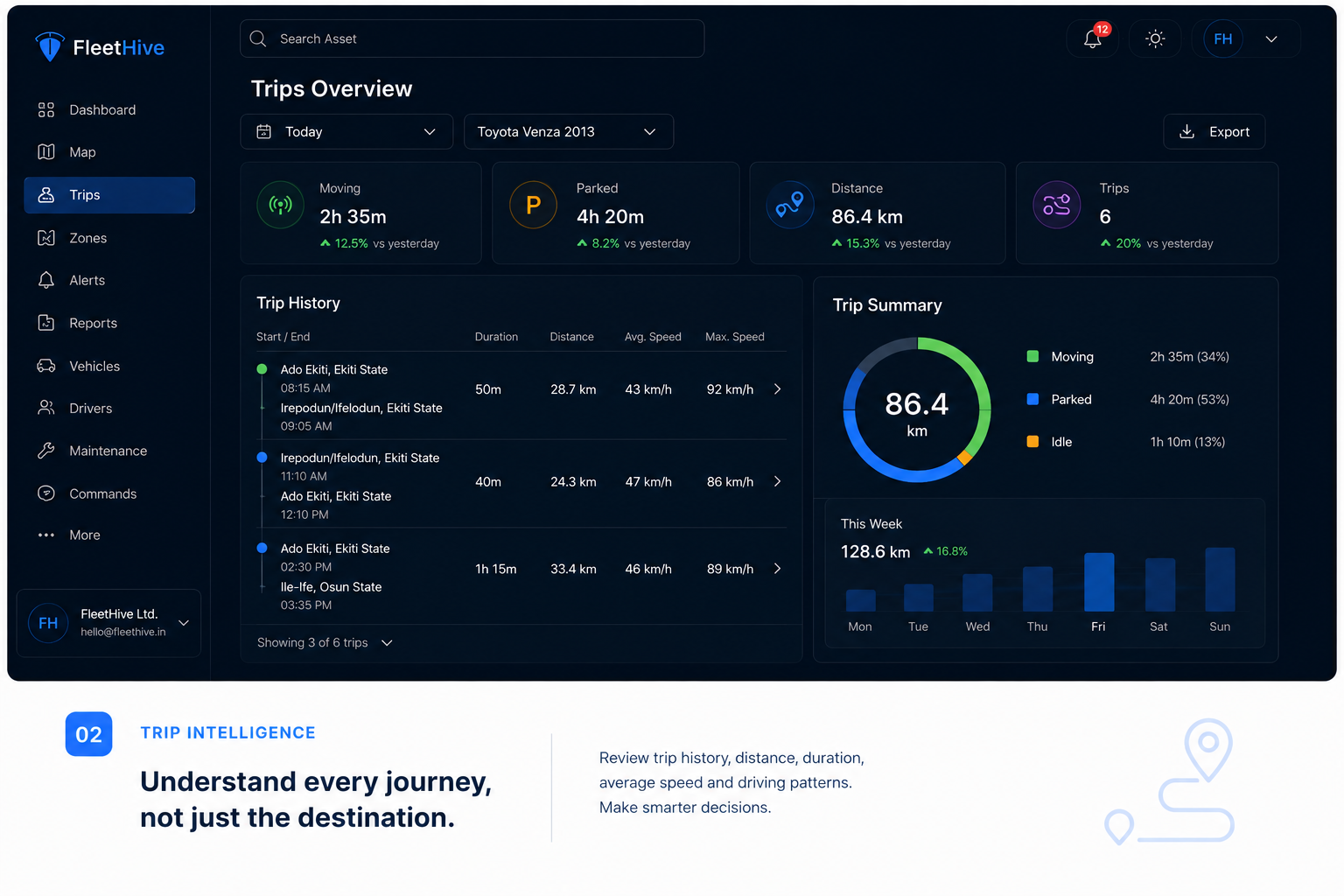
Vehicle tracking can help close that gap. By giving a business a clear record of routes taken, distances covered and time spent on the road, it becomes possible to compare what actually happened against what was expected, and start asking more specific questions about the difference.
Where visibility can help identify avoidable costs
- Unnecessary trips, visibility can help surface detours or trips that don't match the assigned job, prompting a conversation rather than a guess.
- Excessive vehicle usage, patterns like unusually long idle time or vehicles running well beyond their expected hours can become visible over time.
- Poor route choices, repeated use of longer or slower routes can be flagged and discussed with drivers.
- Driver-related issues, patterns such as harsh braking, speeding or unscheduled stops can help a business have more informed, evidence-based conversations with drivers.
- Maintenance issues, consistent tracking data, combined with mileage and usage patterns, can help a business plan servicing before small issues become expensive repairs.
It's worth being clear about what this does and doesn't promise. Vehicle tracking doesn't automatically cut costs, it provides information. What a business does with that information, and how consistently it acts on it, is what determines the outcome. Two businesses using the same tracking tools can see very different results depending on how closely they review the data and follow up with drivers.
A more informed way to manage a fleet
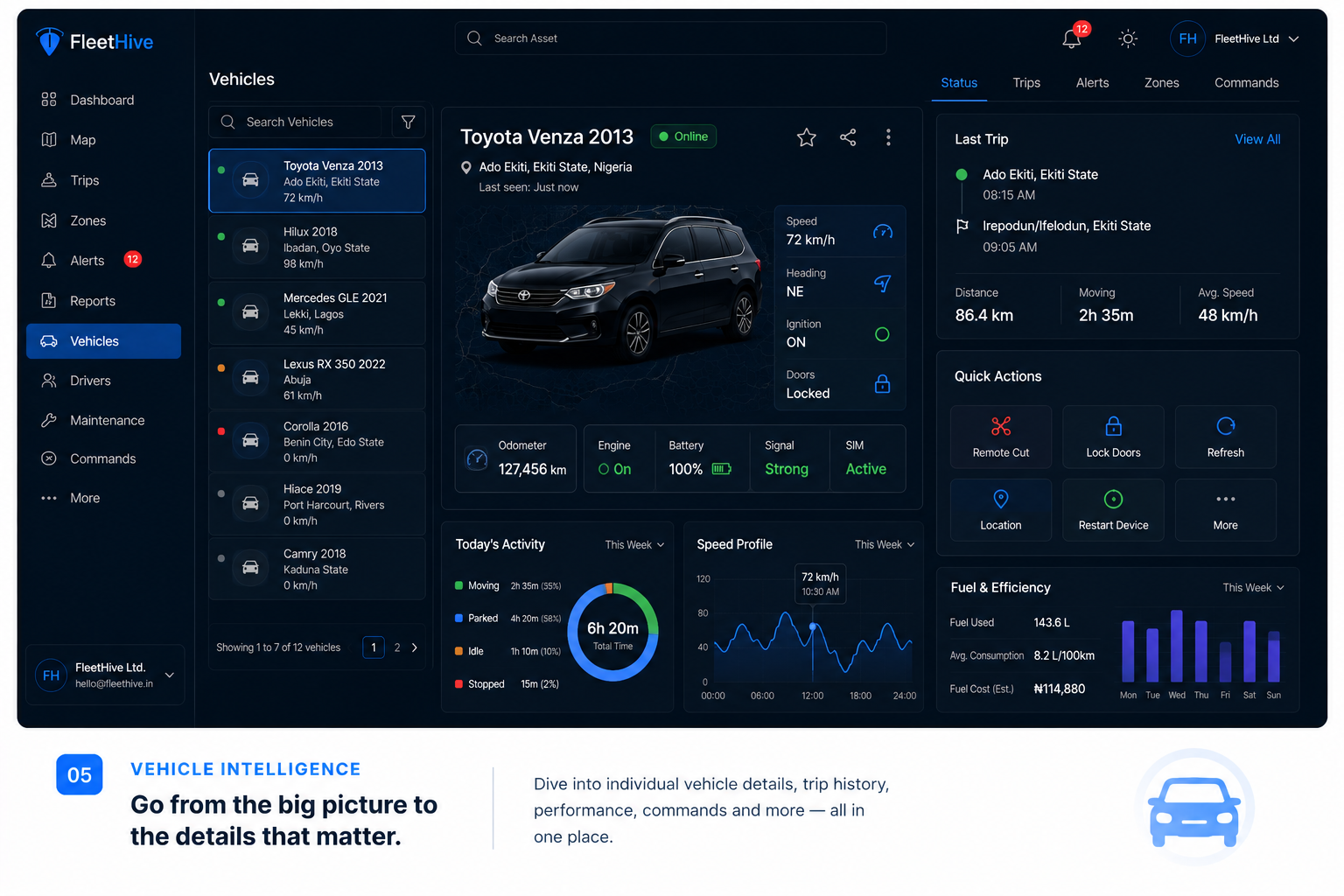
The real value of this kind of visibility is that it replaces guesswork with data. Instead of a fleet manager suspecting that a particular route is inefficient, they can look at the trip history and see it clearly. Instead of assuming a vehicle is being well maintained, they can check its usage pattern and service record side by side.
Over time, this can help a business build a more disciplined operation, not because tracking enforces discipline on its own, but because it gives managers and business owners the visibility they need to manage more effectively.