"Where is my vehicle?" is the question that vehicle tracking answers. It's a useful question, but it's not the only one a fleet owner needs answered.
Tracking: where is my vehicle?
At its most basic, vehicle tracking is a location service. A GPS device reports a vehicle's coordinates, and a dashboard or app shows that location on a map, usually alongside a trip history. This is genuinely useful, it tells you where a vehicle is right now, and where it has been. For many businesses, this alone is a meaningful upgrade from having no visibility at all.
But location on its own is limited. Knowing that a van is at a particular junction doesn't tell you whether that's expected or a problem, whether the driver is behind schedule, or whether the vehicle needs attention. Tracking shows you a dot on a map. It doesn't tell you what to do about it.
Fleet intelligence: what's happening, and what should I do?
Fleet intelligence goes a step further. It takes the same underlying location and trip data and turns it into context, patterns, comparisons and alerts that help a business owner or fleet manager make decisions, not just observe. Instead of just showing where a vehicle is, it can show whether a trip is taking longer than usual, whether a vehicle has left a defined zone, or whether a maintenance interval is approaching based on actual usage rather than a fixed calendar date.
The distinction matters because most fleet owners don't have time to stare at a map all day. What they need is a system that tells them when something needs their attention, and gives them enough context to act on it quickly.
A practical comparison
- Tracking tells you a vehicle left Ikeja at 9:04am. Fleet intelligence tells you this trip is running 20 minutes longer than the driver's usual route, and flags it.
- Tracking shows a vehicle's location on a map. Fleet intelligence can alert you the moment that vehicle leaves an approved zone.
- Tracking logs distance travelled. Fleet intelligence uses that distance, alongside past service records, to flag when a vehicle is due for maintenance.
Why this matters when choosing a platform
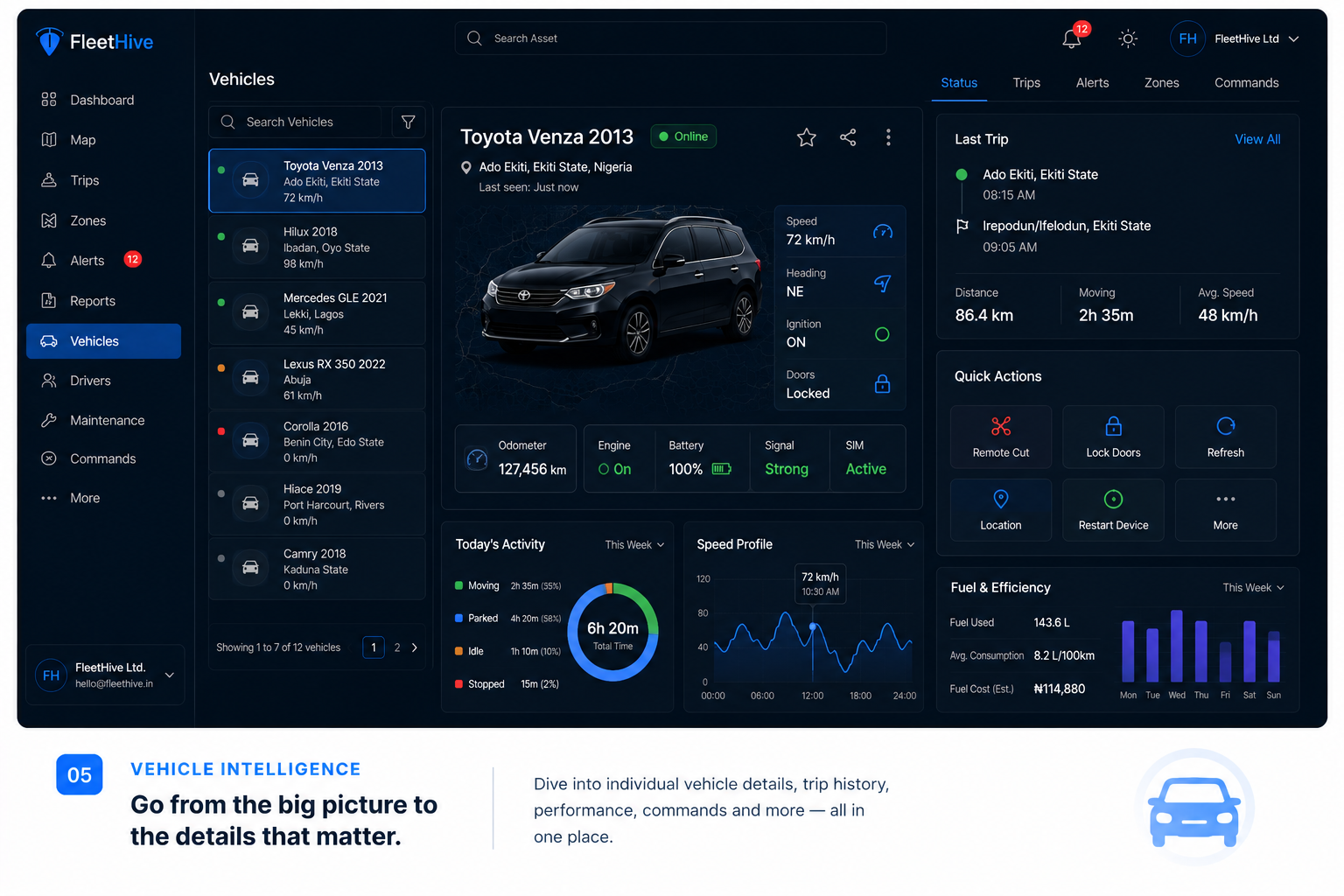
Not every tracking product on the market is built to go beyond the basic map view. When evaluating a fleet tool, it's worth asking not just "can I see my vehicles?" but "does this system help me act on what it shows me?" That second question is really what separates simple tracking from genuine fleet intelligence, and it's the standard FleetHive is built around, combining live tracking with trip intelligence, smart alerts and vehicle health insights in one dashboard.