If you own or run more than one vehicle for business, a delivery van, a small haulage truck, a fleet of dispatch bikes, you're already doing some form of fleet management, whether you call it that or not.
What fleet management actually means
Fleet management is the practice of overseeing every vehicle a business uses to operate, knowing where they are, how they're being used, what condition they're in, and what they're costing you. For a small business with two delivery vans, it might mean a WhatsApp group and a notebook. For a logistics company running forty trucks between Lagos and Kano, it means a much more deliberate system: schedules, checklists, fuel logs, maintenance records and, increasingly, software that pulls all of it into one place.
At its core, fleet management answers a handful of everyday questions: Where are my vehicles right now? Are my drivers where they're supposed to be? Is a vehicle due for servicing before it breaks down on the road? How much fuel are we actually using compared to what we're paying for?
Why it matters for Nigerian and African businesses
Consider a small distribution business in Lagos running twelve vans to supply retail stores across the city. Without any oversight, it's difficult to know whether a van scheduled for a Yaba-to-Ikeja run is actually taking the most direct route, whether it made an unplanned stop, or whether it's sitting in traffic versus sitting idle somewhere it shouldn't be. Multiply that uncertainty across twelve vehicles and several drivers, and the business is effectively operating blind.
The same challenge shows up differently for a haulage company moving goods between Port Harcourt and Onitsha, where long routes, fuel costs and vehicle wear make visibility even more important. In both cases, the businesses that manage their fleets deliberately tend to have an easier time controlling costs, keeping customers informed, and catching problems, a missed delivery, a mechanical fault, a driver taking liberties with company time, before they become bigger issues.
The core pillars of fleet management
- Vehicle visibility, knowing the real-time location and movement history of every vehicle in the fleet.
- Driver management, understanding driving behaviour, trip patterns and accountability on the road.
- Maintenance, tracking servicing schedules so small issues don't turn into breakdowns.
- Fuel monitoring, comparing expected versus actual fuel usage across trips.
- Operational costs, bringing all of the above together to understand what each vehicle really costs to run.
How technology changes the picture
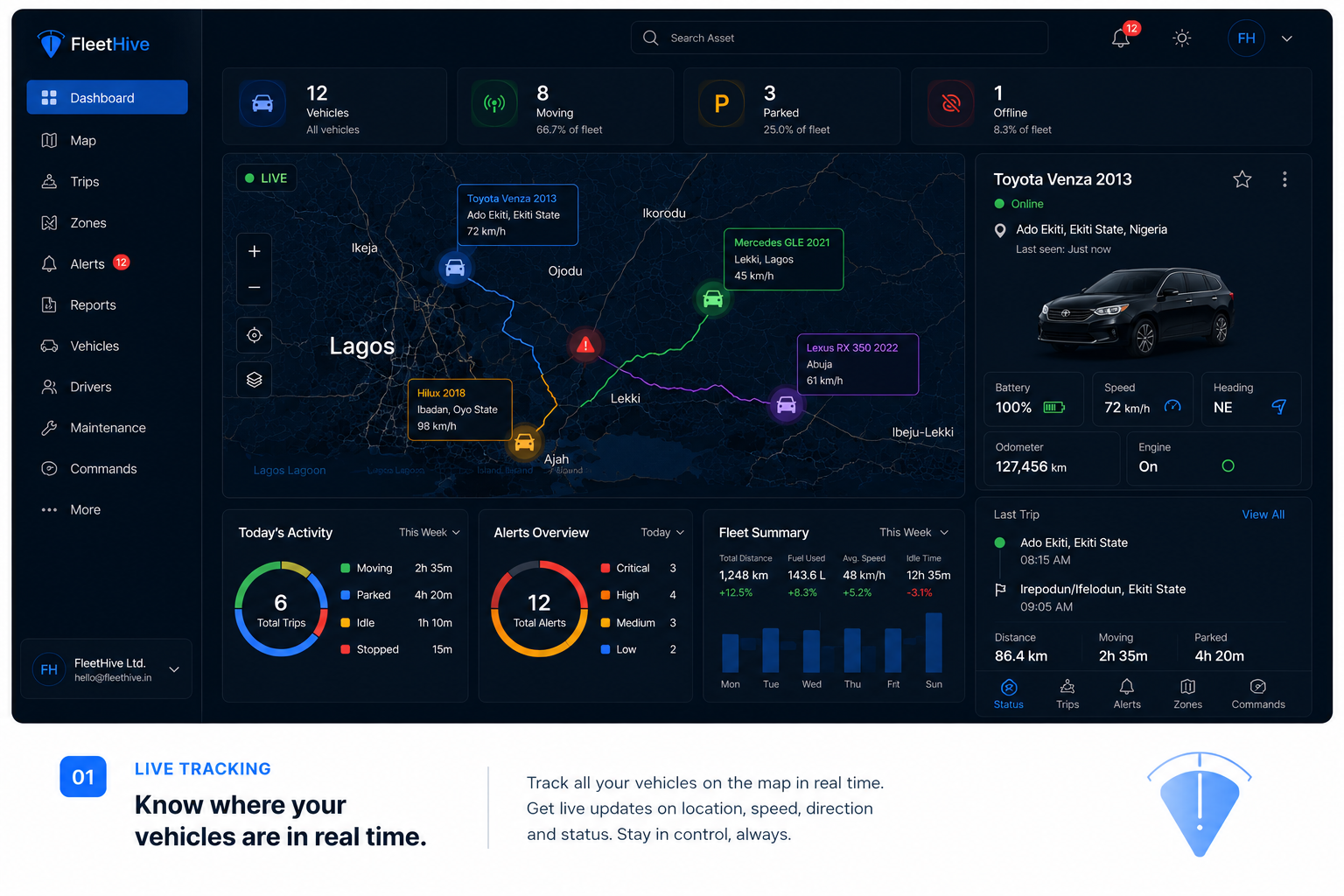
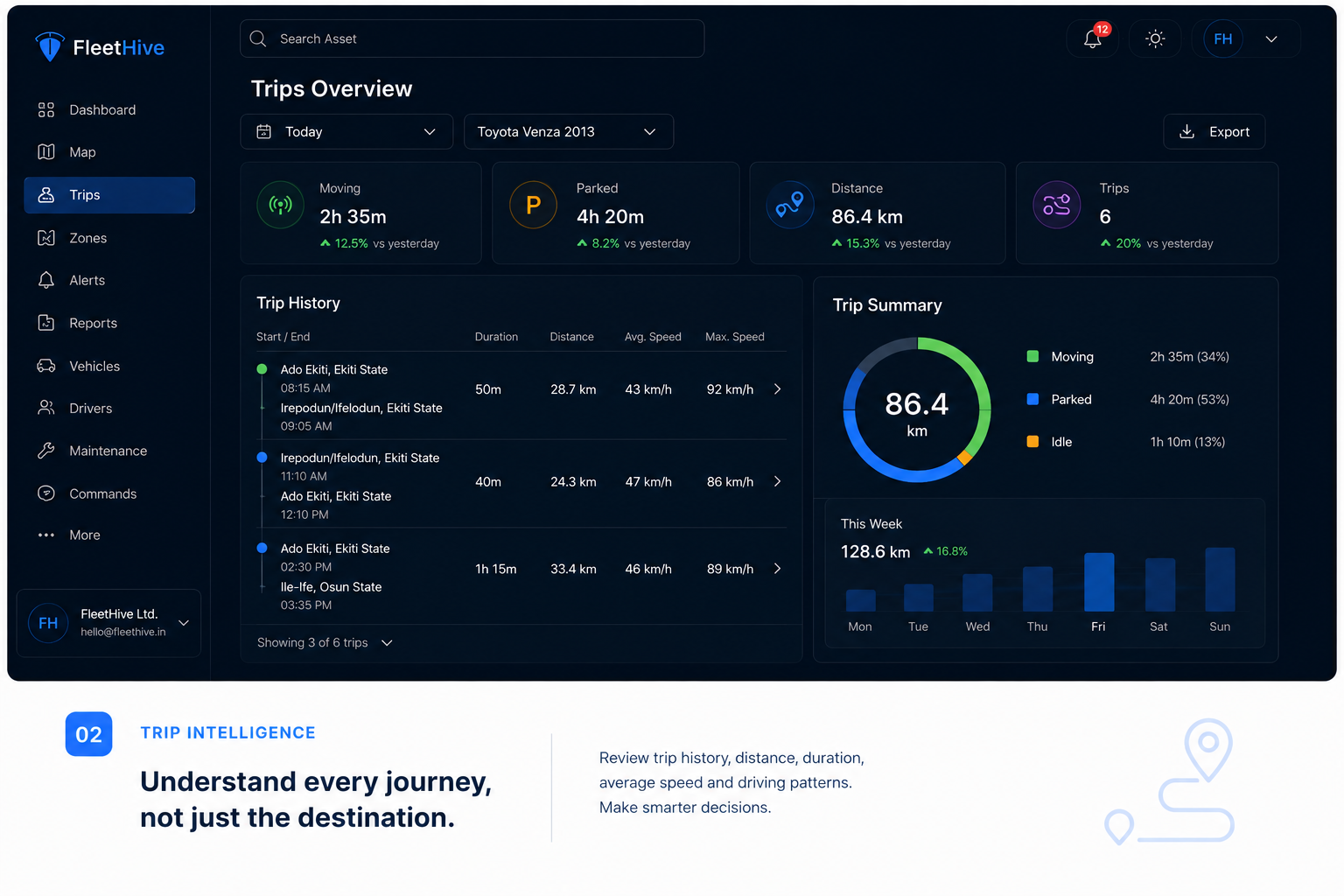
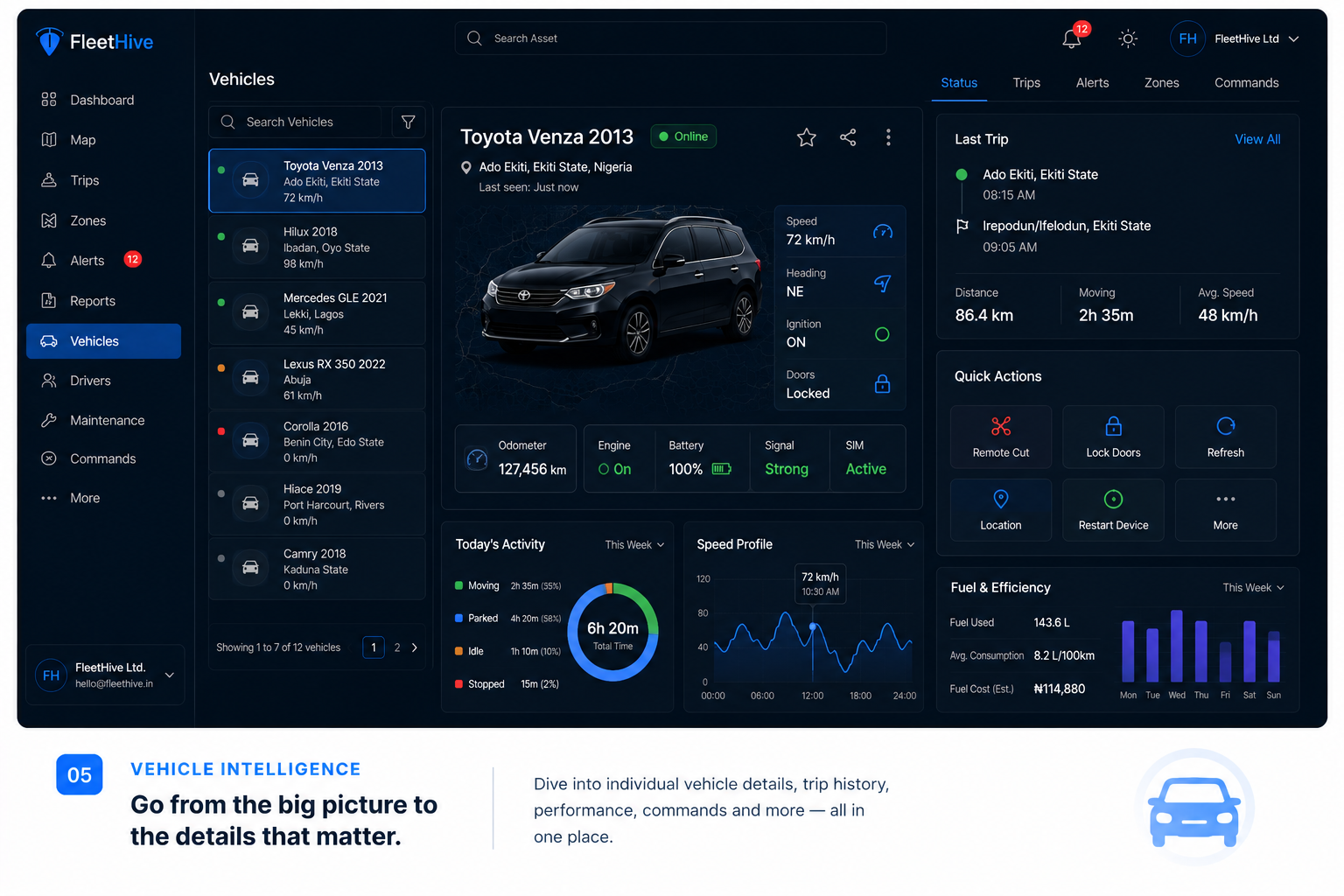
Manual fleet management, spreadsheets, phone calls, physical logbooks, can work for a business with one or two vehicles. It becomes harder to sustain as a fleet grows. This is where vehicle tracking and fleet management platforms come in: a GPS-connected device reports a vehicle's location, movement and trip history to a dashboard that a business owner or fleet manager can check from a phone or computer, anywhere.
Instead of guessing where a vehicle is or waiting for a driver to call in, a fleet manager can see it directly. Instead of discovering a maintenance issue after a breakdown, service reminders can be set in advance. This doesn't remove the need for good management practices, it gives the people managing the fleet better information to work with.
Where FleetHive fits in
FleetHive was built around this exact need: giving Nigerian and African businesses a straightforward way to see what's happening across their vehicles, without requiring a large operations team or expensive enterprise software. Whether it's a handful of company cars or a growing delivery fleet, the goal is the same, clearer visibility, fewer surprises, and a more organised way to run daily operations.