Across Nigeria and the wider continent, more businesses are fitting their vehicles with tracking devices, not as a luxury, but as a basic operational safeguard.
A road environment that makes visibility matter
Africa's road safety record is a sobering backdrop to this shift. According to the World Health Organization's African Region road safety report, the continent recorded close to 225,000 road traffic deaths in a recent reporting year, around a fifth of the global total, despite the region having only about 15% of the world's population and roughly 3% of its registered vehicles.1 The African region is also the only WHO region where road deaths have risen rather than fallen over the past decade.1
In Nigeria specifically, the Federal Road Safety Corps recorded over 10,000 road traffic crashes in 2025, with speeding cited as a leading factor in a large share of cases.2 For any business that depends on vehicles being on the road daily, logistics, distribution, ride services, field sales, this is the environment they're operating in. Knowing where a vehicle is, how it's being driven, and whether it has deviated from its expected route isn't just about efficiency; it's a basic layer of protection for the vehicle, the driver and the goods on board.
What vehicle tracking actually gives a business
- Vehicle security, location visibility that can support faster response if a vehicle is missing or diverted from its expected route.
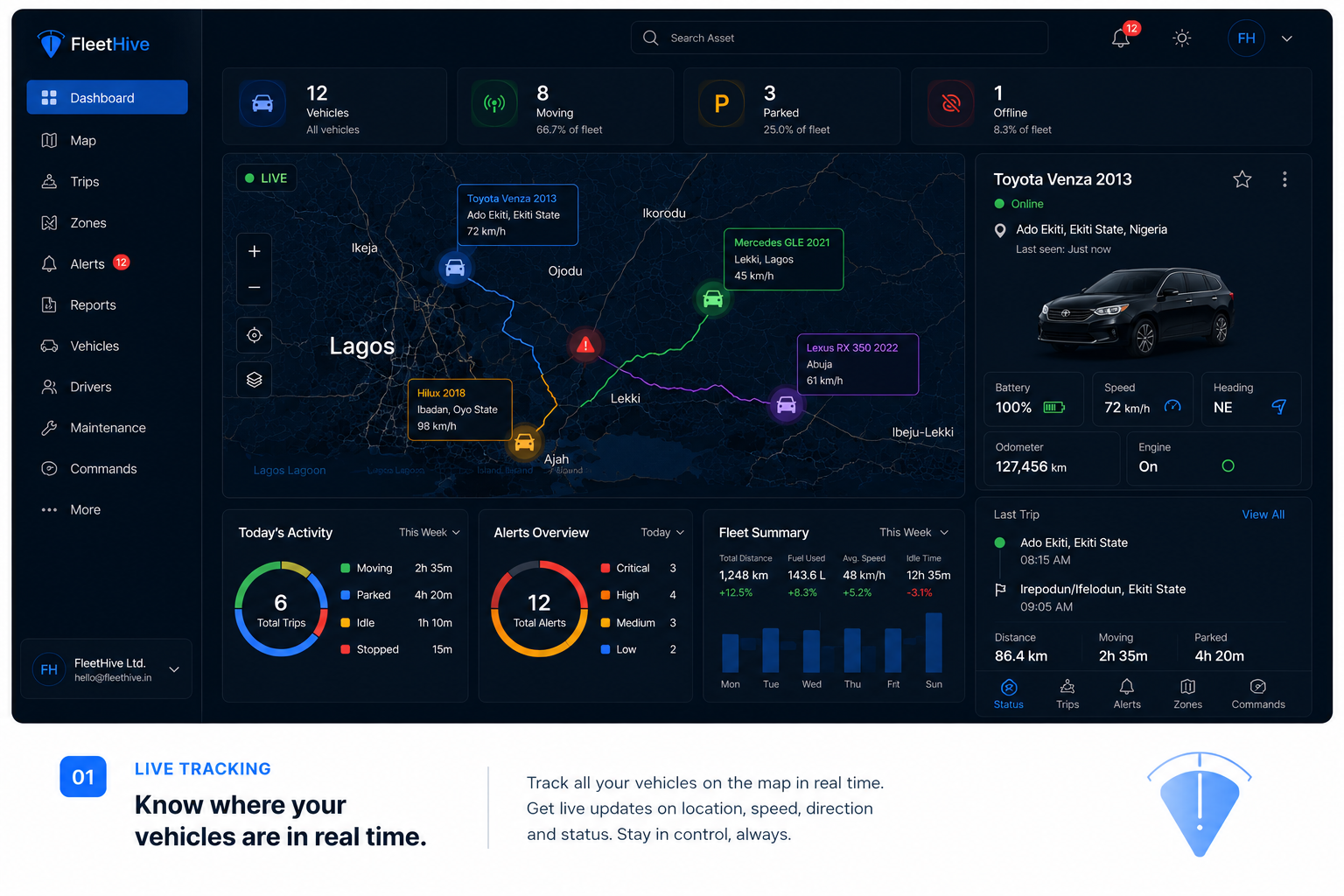
- Knowing vehicle location, a live view of where every vehicle in the fleet is at any given moment, rather than relying on driver phone calls.
- Monitoring movement, visibility into speed, stops and route patterns across a trip.
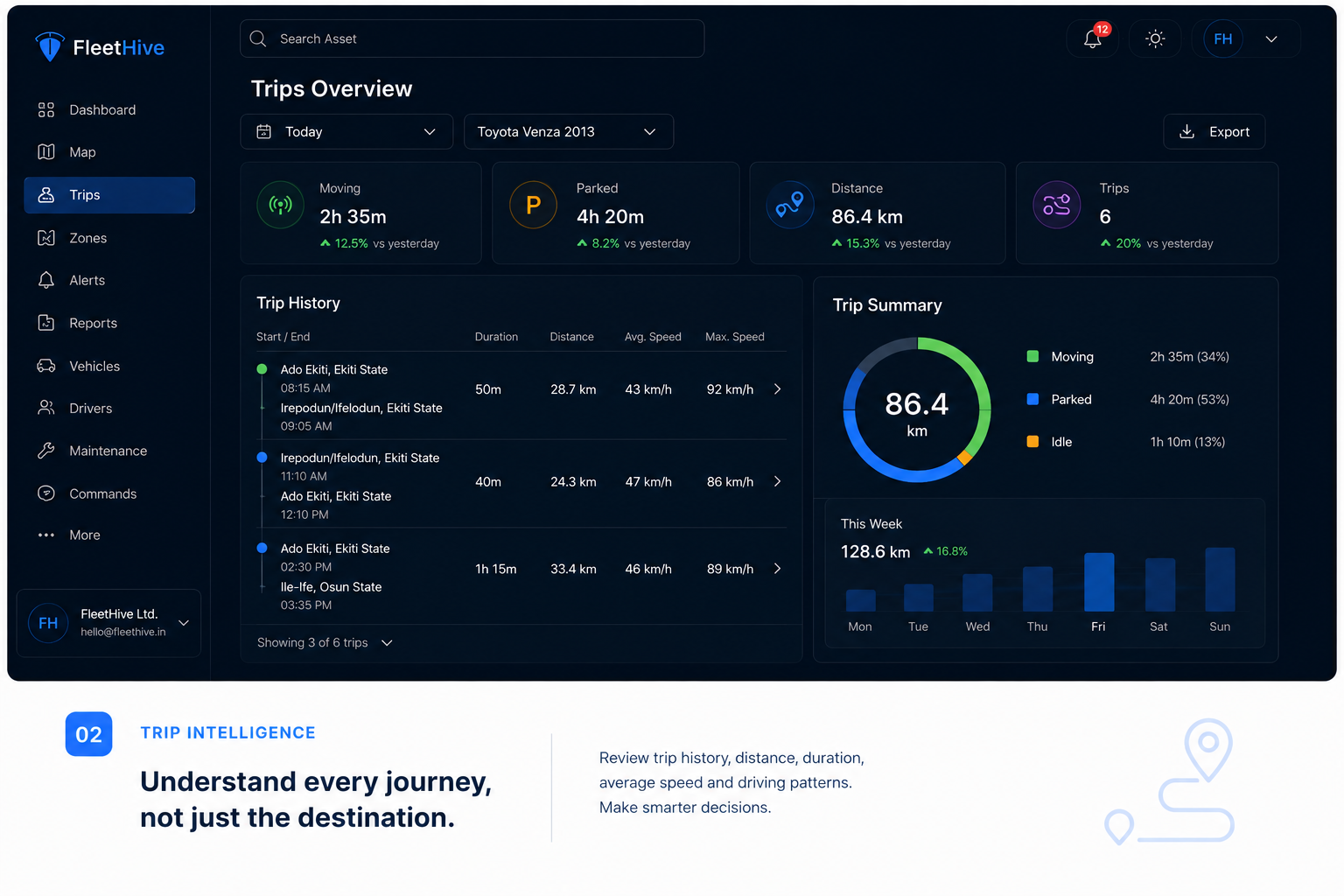
- Trip history, a record of where a vehicle has been, useful for resolving disputes or reviewing patterns over time.
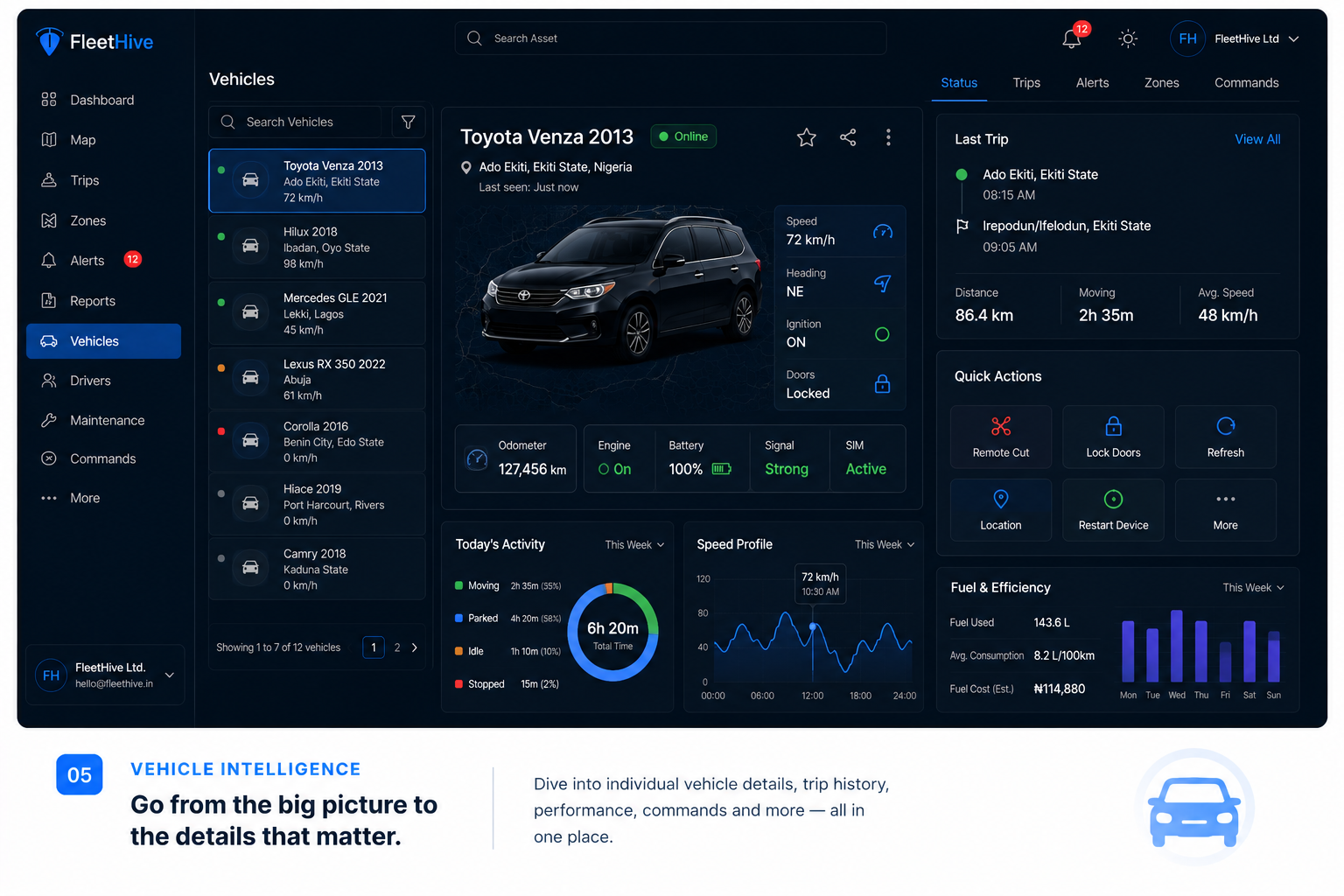
- Driver activity, a clearer picture of how vehicles are actually being used during working hours.
- Business efficiency, fewer blind spots between what a business expects to happen and what's actually happening on the road.
Why this is becoming standard, not exceptional
A decade ago, vehicle tracking in Nigeria and much of Africa was mostly associated with large logistics companies and corporate fleets. That's changing. As GPS hardware has become cheaper and mobile-first dashboards have made the technology easier to use, small and mid-sized businesses, a three-van delivery service, a school bus operator, a car-hire business, are adopting the same kind of visibility that was once reserved for much bigger operations.
This mirrors a broader pattern across African logistics, where GPS-enabled fleet visibility and route optimisation tools are increasingly used to improve reliability on freight corridors across the continent.3 The underlying driver is the same regardless of business size: it's difficult to manage what you can't see, and vehicles operating without any oversight represent risk, financial, operational and physical.
Getting started
For a business considering vehicle tracking for the first time, the starting point doesn't need to be complicated. A single tracking unit on a pilot vehicle is often enough to demonstrate the value before rolling it out fleet-wide.
Sources / References
- World Health Organization, AFRO — Road traffic deaths rise in the African region, but down globally, WHO report
- Africa Check — Factsheet: Road safety in Nigeria, citing Federal Road Safety Corps (FRSC) data
- Market Data Forecast — Africa Freight Logistics Market